
Kitsch and the Common Good


*“Kitsch and the Common Good” draws heavily on Hermann Broch, who featured largely in this recent post. Although the essay is not included in More than a Matter of Taste: The Moral Imagination and the Spirit of Literature (forthcoming through Word on Fire in April of 2026), a number of the arguments found below crop up in different costumes in that book too. Recently, the Australian publisher Dispatch acquired the essay as a chapter in their book Notes on Kitsch, due out sometime in late 2026.
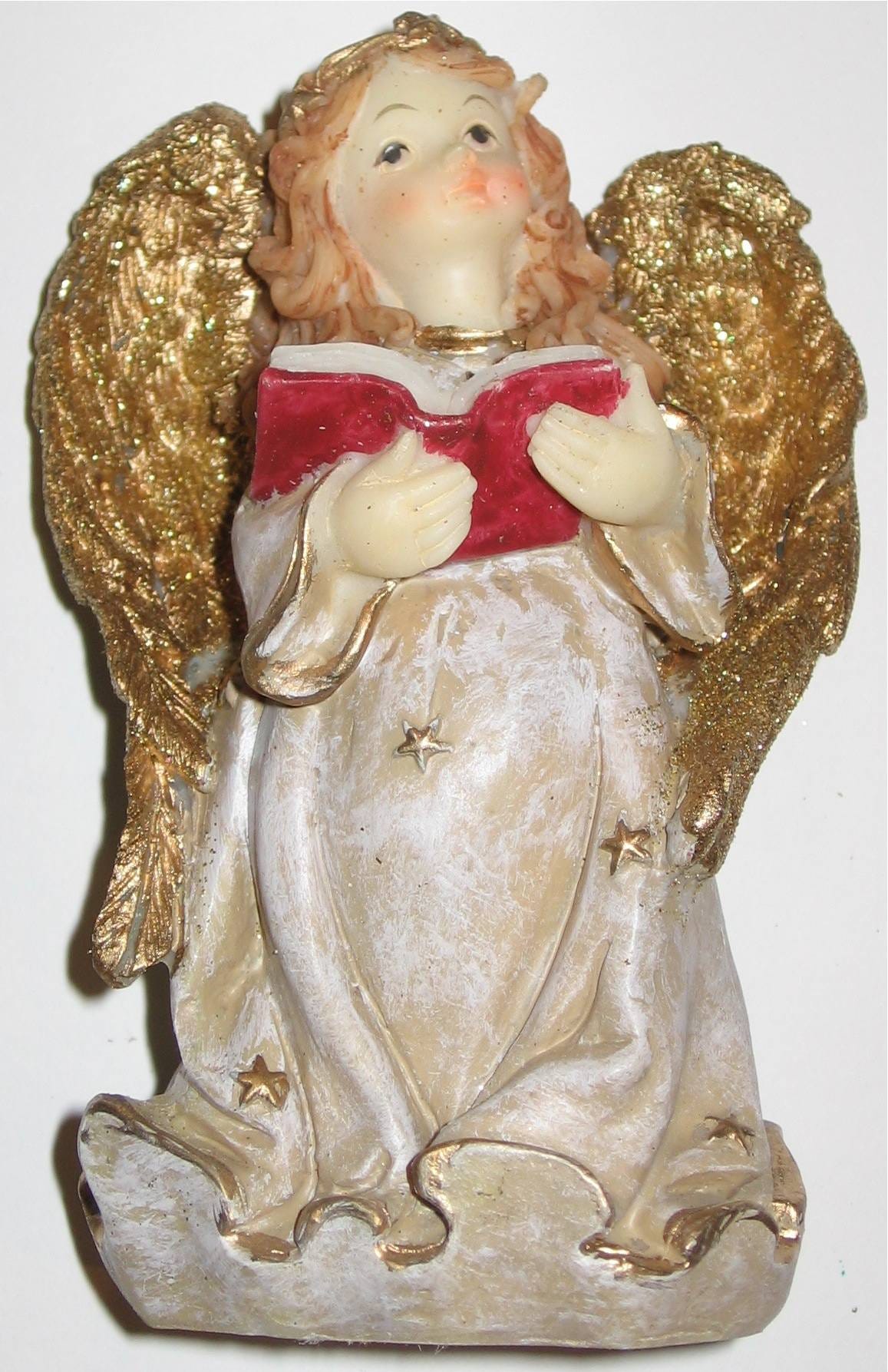
** Given the prospective misunderstanding that “kitsch” is synonymous with “low,” as if kitsch were low culture and art high, allow me to clarify that kitsch is crap in art, any art—high or low, popular or the preserve of an aristocracy or elite. And, as J.F. Powers argues, “God doesn't like crap in art.”
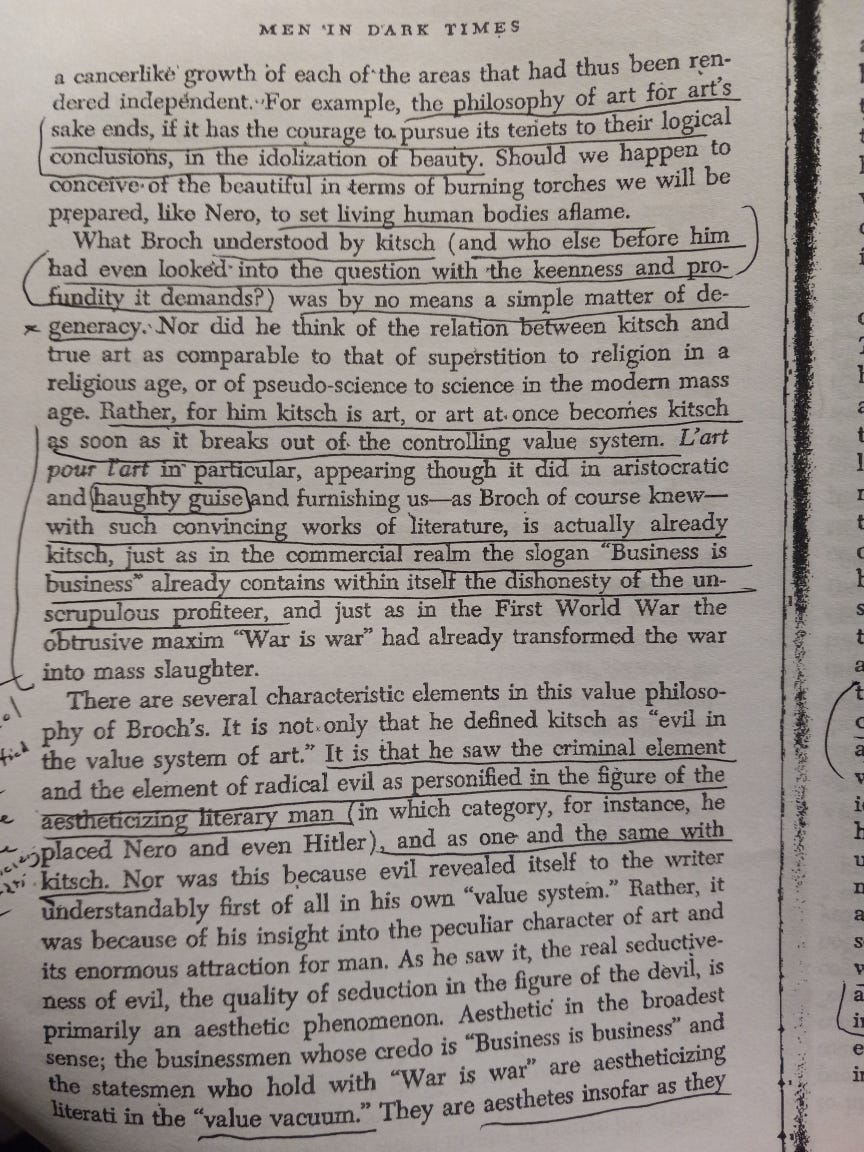
***One more note. Here’s Hannah Arendt on Hermann Broch’s conception of kitsch, from her long essay on and tribute to Broch from Men in Dark Times (they were friends and collaborators):
Given the imperative necessity to please and thereby to gain the attention of the greatest number, the aesthetic of the mass media is inevitably that of kitsch; and as mass media comes to embrace and to infiltrate more and more of our life, kitsch becomes our everyday aesthetic and moral code.
—Milan Kundera, “The Novel and Europe”
In his plotless masterpiece The Strudlhof Steps, Austrian novelist and Catholic convert Heimito von Doderer pauses at the edge of a forest to deliver an extended and elegiac encomium of nature’s beauties (“the wounds of the woods, torn open anew each spring by masses of water with their dull grinding”), only to end with an about face: if anyone “ever said outright that this spinach-green sublimity . . . was enough to turn his stomach, he would be considered an evil person.” Doderer’s playful portrayal of the relationship between ethics and aesthetics raises a real question: can our artistic tastes be (if maybe only in a venial sense) immoral?
Hermann Broch, another Austrian novelist (The Death of Virgil, The Sleepwalkers) and Catholic convert, argues that in our present age of “value-anarchy,” artistic expression dramatizes an “enormous tension between good and evil within art.” Broch calls good “that art which in its purest state is under the rule of the ethical.” Here he is not praising sentimental, moralistic uplift but rather hard-won portrayals of both a widening gyre of civilizational decline and the vestiges of goodness that counter dissolution. On the other end of the continuum, “the evil in art is kitsch.” Kitsch, a bastard child of the bourgeois age, is no harmless outgrowth of materialism. No: this elevation of “the mundane . . . to the level of the eternal” is akin to the “the mask of the Antichrist, who bears Christ’s features but is Evil nonetheless.”
Read the rest of this essay HERE.

Pre-ordered More than a Matter of Taste via Amazon
Excited for the cover!
So the revulsion I feel at the neighbors’ inflatable Star Wars Xmas yard display is not just me being depressive?